



Printed circuit assembly services
Troubleshooting issues in printed circuit assembly (PCA) services is a critical aspect of ensuring the quality and reliability of electronic products. From minor defects to major malfunctions, identifying and resolving issues promptly is essential to minimize production downtime and prevent costly rework. Effective troubleshooting requires a systematic approach, combining technical expertise, diagnostic tools, and problem-solving skills to pinpoint the root cause of the problem and implement appropriate solutions.
One of the first steps in troubleshooting PCA issues is to thoroughly inspect the assembled circuit boards for visual anomalies. This includes examining solder joints, component placement, and printed circuit assembly services traces for signs of defects such as solder bridges, insufficient soldering, misaligned components, or damaged traces. Visual inspection can often provide valuable clues about the nature and location of the problem, guiding further diagnostic efforts.
In addition to visual inspection, electronic testing equipment, such as multimeters, oscilloscopes, and continuity testers, can be used to perform electrical measurements and identify abnormalities in circuit performance. By probing key points on the PCB and comparing the measured values to expected specifications, technicians can diagnose issues related to electrical connectivity, component functionality, and signal integrity. This process may involve testing individual components, checking voltage levels, or verifying signal waveforms to isolate the source of the problem.
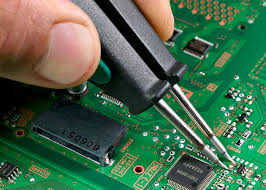
How do you troubleshoot issues in Printed circuit assembly services?
Furthermore, thermal imaging cameras can be employed to detect overheating components or areas of excessive thermal stress on the PCB. Thermal anomalies may indicate issues such as short circuits, excessive power dissipation, or inadequate thermal management, which can lead to performance degradation or premature component failure. Identifying and addressing thermal issues early on is crucial for preventing long-term damage to electronic devices and ensuring their safe and reliable operation.
In cases where intermittent or intermittent issues occur, environmental testing chambers can be used to simulate real-world operating conditions and provoke the manifestation of the problem. By subjecting the PCB to temperature, humidity, vibration, or mechanical stress variations, technicians can observe how the device behaves under different conditions and identify potential weaknesses or failure modes. This proactive approach to testing can help uncover latent defects that may not be apparent during normal operation.
Moreover, collaborative problem-solving techniques, such as root cause analysis (RCA) and failure mode and effects analysis (FMEA), can be employed to systematically investigate complex or recurring issues in PCA services. By analyzing the sequence of events leading up to the problem, identifying potential failure modes and their underlying causes, and prioritizing corrective actions based on their impact and feasibility, technicians can develop effective solutions to prevent similar issues from occurring in the future.
In conclusion, troubleshooting issues in printed circuit assembly services requires a combination of technical expertise, diagnostic tools, and problem-solving skills. By employing systematic inspection, electronic testing, thermal imaging, environmental testing, and collaborative problem-solving techniques, technicians can identify and resolve issues promptly to ensure the quality and reliability of electronic products. Effective troubleshooting not only minimizes production downtime and rework costs but also enhances customer satisfaction and brand reputation in the highly competitive electronics industry.
