



stencil printing play in circuit board assembly services
Circuit boards are the foundation of nearly all electronic devices, serving as the platform upon which intricate electronic circuits are constructed. In the realm of electronics manufacturing, two key processes play a pivotal role in the creation of these essential components: circuit board assembly services and circuit board manufacturing. While they are closely related, each process encompasses distinct stages and functions, contributing to the overall production of electronic devices in unique ways.
Circuit board manufacturing encompasses the production of bare circuit board assembly services, also known as substrates, which serve as the physical foundation for electronic circuits. This process involves the fabrication of the raw circuit board material, typically composed of non-conductive substrates such as fiberglass or epoxy resin, laminated with copper traces. Advanced manufacturing techniques, including chemical etching and mechanical milling, are employed to precisely create the intricate circuit patterns and features specified in the design.
In contrast, circuit board assembly services focus on the integration of electronic components onto the fabricated circuit boards to create functional electronic systems. This process involves populating the bare circuit boards with a variety of components, including resistors, capacitors, integrated circuits, and connectors, according to the design specifications provided. Advanced assembly techniques, such as surface mount technology (SMT) or through-hole technology (THT), are employed to accurately position and solder the components onto the boards.
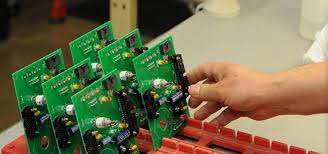
What role does stencil printing play in circuit board assembly services?
One key distinction between circuit board manufacturing and assembly services lies in the complexity of the processes involved. Circuit board manufacturing primarily deals with the creation of the physical substrate, requiring specialized equipment and expertise to fabricate precise circuit patterns and features. On the other hand, circuit board assembly services focus on the assembly of electronic components onto the fabricated boards, involving intricate placement, soldering, and inspection processes to ensure quality and functionality.
Furthermore, circuit board manufacturing tends to be a highly automated process, with advanced machinery and robotics used to mass-produce bare circuit boards with high precision and efficiency. In contrast, circuit board assembly services often require a combination of automated machinery and skilled labor to accurately populate and solder components onto the boards, particularly for complex electronic systems with diverse component types and sizes.
Another distinguishing factor between circuit board manufacturing and assembly services is the level of customization and flexibility offered. Circuit board manufacturing primarily focuses on producing standardized bare circuit boards in large quantities, catering to the mass production needs of various industries. In contrast, circuit board assembly services can accommodate a wide range of customization options, including prototype development, small batch production, and high-mix, low-volume manufacturing, to meet the specific requirements of individual customers and projects.
Moreover, circuit board assembly services often extend beyond the assembly process to include additional value-added services such as testing, inspection, and packaging. These services ensure the quality, reliability, and functionality of the assembled electronic systems, providing customers with comprehensive solutions tailored to their specific needs.
In conclusion, while circuit board manufacturing and assembly services are closely intertwined, they represent distinct stages in the production of electronic devices. Circuit board manufacturing focuses on the fabrication of bare circuit boards, while circuit board assembly services involve the integration of electronic components onto these boards to create functional electronic systems. Understanding the differences between these processes is essential for navigating the complexities of electronics manufacturing and delivering high-quality products to market.
