



rapid radios
Rapid Radios are different than regular radios in many ways. They run on cellular networks and don’t require a monthly fee. They also have instant “push to talk” technology. They work even if there is no cell signal or the tower goes down. Governmental and security communications products for secure long-range voice, data and position services. Empower your team with world-leading secure digital communication.
The radio is a powerful tool for communication. It was used during World War II to broadcast vivid reports of battles and other news. It was also an important means of influencing public opinion, as Franklin D. Roosevelt, Winston Churchill, and Adolf Hitler all used it to spread their messages. The more watts a radio has, the farther its signal will travel. However, the type of antenna you use can make a huge difference. For example, if your radio has 25 watts and you mount it high up on a vehicle, it will have far more range than the same radio mounted on the ground.
Unlike analog two-way radios, rapid radios use digital technology to transmit voice communications. This allows for secure communication and increased functionality, such as GPS tracking and text messaging. They are also less susceptible to noise interference and offer better clarity than analog radios. They can also support multiple channels and feature encryption.
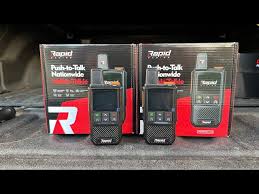
How do rapid radios differ from regular radios?
Rapid radios provide crystal clear push-to-talk communication across your property, town, or around the world – without the need for repeaters, costly cell networks or satellites. You can even use them with your current mobile phones to avoid expensive charges and data plans. Designed, built and managed in Australia, RAPID utilises a revolutionary all-Australian secure protocol that enables true one-to-many communication performance. It outperforms traditional LMR two-way radio solutions in key functional performance tests, including call volumes and usage behaviors.
They claim to have no monthly fees – but it’s the same old snake oil nonsense as companies like Jitterbug that rent usage on existing cell networks requiring phone service. If the cellular network goes down, they go down as well. If you need to talk during a disaster or when the power is out, you have much better options that will work – just don’t buy this garbage.
Rapid is a two-way radio system that is easy to set up and use. It has a simple user interface that allows you to easily identify the status of all incoming feeds and outputs. It also lets you create weekly templates and override regular programming with one-off special events. It can also import music and show content from NPR’s MetaPub and Composer services.
Two-way radios can be extremely helpful in emergency situations. They help save lives by providing instant communication. These radios can be used by firefighters, police officers, and other emergency medical teams to keep in touch with each other. They can even be used to communicate with large groups of people in an event such as a concert or festival. Rapid’s world-class digital technology delivers unsurpassed data speed, voice clarity and reach, well beyond line of sight. It’s also a great option for businesses that need secure, long-range communication. It works on cellular networks and has no monthly fees.
The TC Product Family of embedded modems gives radio makers next-generation digital capabilities at minimal integration effort and a low overall cost. They provide unsurpassed data speed, voice clarity and reach far beyond line of sight. Unlike cell phones, which are public communications that can be listened in on by the government, these radios offer secure communications with AES and end to end encryption standards. Only those who are supposed to hear the communication will be able to do so, and no one else.
The amount of range a radio can have depends on the strength of its signal, which is measured in watts. A high wattage radio will have a stronger signal that can withstand more obstacles, and therefore, a greater range. However, the type of antenna used will also have a significant impact on range. For example, an antenna mounted on a ship will have 3 to 4 times the range of an antenna mounted on the ground.
