



Reflow Soldering Contribute to Rf Circuit Board Design
The Printed Circuit Board (PCB) provides the foundation for electronic components to connect and form functional devices. To ensure strong connections between components and the PCB, reflow soldering is used. This specialized process is carried out in a reflow oven with carefully controlled temperature profiles. This method ensures that the components and solder paste will melt and fuse properly, resulting in durable and reliable connections.
The first step of reflow is the preheating phase, where the temperature of the board is gradually increased to avoid thermal shock to the components. Once the PCB reaches its target temperature, it is moved into the thermal soak area. This step is important because it helps to eliminate shadowing, which occurs when certain areas of the board are not heated evenly and can cause problems with the functionality of the product.
Once the board has cooled enough, it can be removed from the reflow oven and is ready for assembly. Once the components have been placed, the reflow oven is re-heated to return it to its reflow temperature. During this stage, the flux in the solder paste reduces surface tension at the joining points of the metals to promote metallurgical bonding between the components and the PCB. The heat also melts the solder powder spheres, which fuse with the metals and create stable joints.
After the reflow process is complete, the PCB is cooled again to prevent thermal stress that can damage the components and cause solder defects. It is important that the cooling process is controlled to prevent rapid temperature changes that could result in defects such as thermal stresses, graping, and head-in-pillow defects.
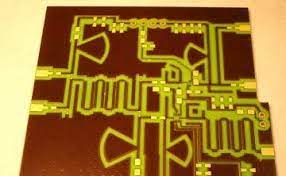
How Does Reflow Soldering Contribute to Rf Circuit Board Design?
The control systems of the reflow oven monitor and adjust the heating zones to ensure consistent results and adhere to specific temperature profiles for different components and solder paste compositions. This is a vital component of reflow soldering and ensures high-quality, repeatable results for all production runs. The conveyor systems and automated heating profiles also allow manufacturers to produce large quantities of finished products quickly, efficiently, and reliably.
This allows them to meet demand and keep up with rapidly changing market demands. Moreover, reflow is a cost-effective solution for high-volume manufacturing. It enables manufacturers to keep their production costs low by decreasing the amount of time spent on manual labor and increasing their output per hour. This makes it an excellent choice for a manufacturing environment where quality is crucial and profit margins are slim. However, reflow is not a suitable solution for small batches or prototypes where the cost of each unit would be too expensive to justify the investment. In these situations, wave soldering is a better option.
rf circuit board design are highly sensitive to electromagnetic interference (EMI). Reflow soldering minimizes the risk of such interference by creating uniform and robust solder joints, which are essential for maintaining signal integrity. Poor soldering can create gaps or weak joints that act as unintended antennas or reflectors, causing EMI and signal degradation. Reflow soldering’s controlled process helps maintain the integrity of the signal pathways, ensuring minimal interference.
