



Carbon Offset Projects in a Carbon Credit Exchange
Carbon offset projects help companies, governments and individuals meet their greenhouse gas (GHG) emissions reduction goals. In particular, they can make up for a portion of emissions that cannot be eliminated in-house, such as from a flight or purchasing a product. Ambitious organizations, such as software giant Microsoft, have even pledged to be carbon negative and remove all of the emissions they’ve emitted since their founding by 2050 through the purchase of additional offsets.
Essentially, a carbon credit represents one metric ton of reduced or avoided GHG emissions. They can be purchased on the voluntary or regulatory markets. Each credit must be verified by an independent body to ensure it is legitimate and can be used as intended. The verification process includes rigorous assessment of the project, including a review of its legal requirements and the extent to which it generates additional social or environmental benefits in line with the UN’s Sustainable Development Goals.
There are several different types of carbon credit exchange. Some are permanent while others are temporary. The key factor for a carbon credit to be considered valid is that it must be “leakage-free,” meaning that the emission reductions created by the project should not shift emissions elsewhere, for example by protecting forests from deforestation in one area which may then be cleared in another. The verification bodies set strict rules on this issue, and the forestry sector in particular has a good record of adhering to these standards.
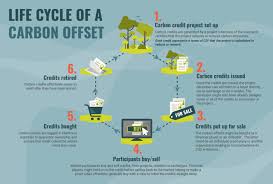
The Role of Carbon Offset Projects in a Carbon Credit Exchange
All projects start with an idea for a way to avoid or reduce GHG emissions through nature-based solutions, health & livelihood interventions, or sustainable infrastructure. The developers then work to flesh this out into a fully fleshed-out Project Design Document, or PDD, that can be submitted to a registry for validation. If a project meets the stringent requirements of an internationally-recognized standard, it is then eligible to be bought and sold.
Regulated carbon markets are the more familiar type of carbon credit market, where entities are under legal obligation to cut their emissions. These are often linked to national or regional climate policies that create a carbon “cap” for regulated sectors, and companies can trade allowances between each other to stay within the cap. They can also buy “approved” offsets from external emission-cutting projects to stay under the cap.
These carbon credit markets are often less well understood than the voluntary ones, which are not legally mandated. This is largely because they are more complex, as a company can choose to cut its own emissions and then buy credits from outside sources for the remainder of its footprint. This can lead to a range of risks, such as double counting or leakage.
The more sophisticated carbon markets have standards in place to try to mitigate these issues, including the use of carbon credits to count as much of an entity’s reduction goal as possible. They also include provisions to ensure that the reductions are genuine, additional and permanent.
