



Used for Piano Transcription
When a musician wants to learn music from a recording in order to play it on their own or write it, they must transcribe it first. Transcription software assists this process by transcribing a piece of music into sheet music. It helps musicians loop segments of a song and use the integrated piano to create an accurate transcription. This makes it easy for musicians to practice new pieces and improve their performance. This is an ideal tool for performers and teachers alike.
The best transcribe piano software offers an intuitive user experience and a comprehensive set of tools for recording notes. It should also have a high accuracy rate. Various factors influence this, including the kind of microphone used, background noises, and the ability to distinguish different instruments. However, the most important factor is the software’s overall ease of use. It should be easy to record and edit using either a keyboard, mouse or MIDI keyboard. In addition, the software should offer a good list of output formats for publishing quality printing and exporting to MP3 files.
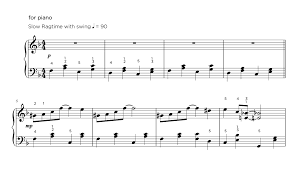
A reputable program such as Finale PrintMusic is highly regarded for its versatility and a good list of editing options. It can be entered using a keyboard, mouse or MIDI piano, and it supports a wide variety of file formats for export. It can also be used to import music from audio files and scans of printed music. Alternatively, it can be used to create music from scratch using a variety of instruments and voices.
https://tartalover.net/nicole-pesce
What Software Tools Are Commonly Used for Piano Transcription?
The standard version of Sibelius is a familiar name in the world of music creation software and, like its competitor, Finale, it provides robust engraving capabilities. It also has a sleek interface that is both responsive and intuitive, quickly reacting to changes in time signatures or key. It also offers a number of useful features, such as Smart MIDI import that automatically adjusts the layout and timing of individual instrument parts. It can also be bundled with NotePerformer, an additional plug-in that enables it to transcribe complex MIDI compositions.
https://m.youtube.com/@tartalover2682/videos
Several other programs can also be used for piano transcription. One such is QuickScore Elite Level II, which is an audio notation program that can transcribe music from a variety of formats, including MIDI and sheet music. It also includes a range of other functions, such as an audio editor and a spectrogram which displays the strength of the various pitches as a series of wavy lines over a piano keyboard graphic.
This can be helpful for working out chords, but the spectrogram must still be analysed by the musician to determine which peaks represent actual notes and which are just harmonics or broad-band noise. Another option is LilyPond, an open source notation program which is based on the XML musical notation language and can be used on Windows, Mac OS X, Unix/Linux, and Raspberry Pi. This is a more involved program and requires a fair amount of knowledge of coding languages, but it can also produce some very sophisticated scores.

